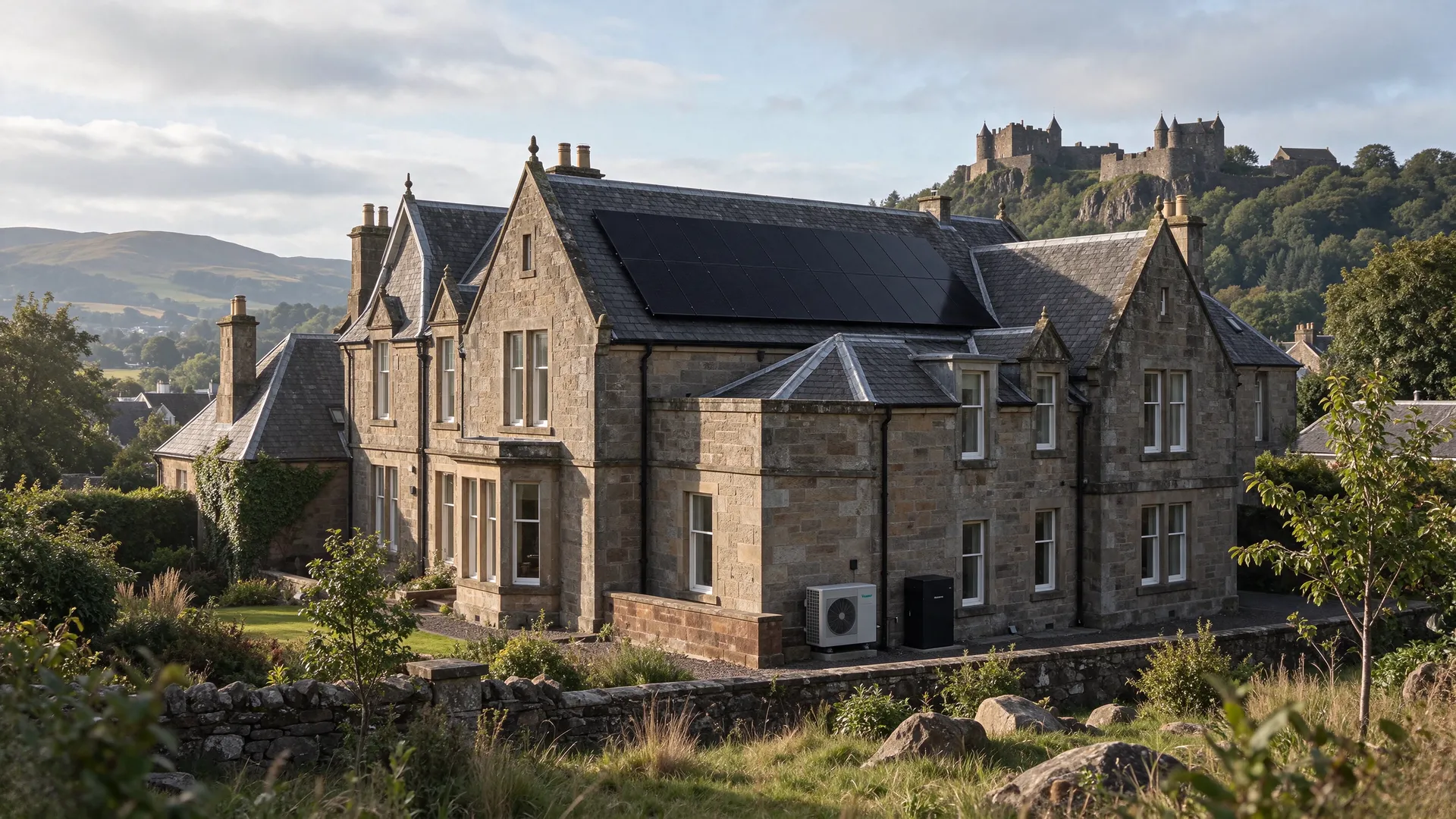
Residential street of traditional Glasgow homes with roofs suitable for solar panels

Are solar panels worth it in Scotland?

An honest assessment of whether solar panels make sense for Scottish homes in 2026.

Quick answer

Are solar panels worth it in Scotland?

Yes, for most Glasgow and Scottish homes. A 6kW system generates 3,400–3,800 kWh per year in Glasgow (MCS MIS 3002 data), cuts your electricity bills by replacing grid power with free solar generation, and earns export income through the Smart Export Guarantee. Whether the payback suits you depends on your roof, usage pattern, tariff and whether you add a battery.

Last updated:

How do I get my quotes?

Two minutes. No obligation.

1
2
3

No obligation · We install through MCS-certified partners · Scottish homes and businesses

Do solar panels work in Scotland's climate?

Yes. Solar panels generate electricity from daylight, not direct sunlight. While Glasgow receives less annual sunshine than southern England, the long summer days — over 17 hours of daylight in June — produce substantial generation. A 6kW system in Glasgow generates approximately 3,400–3,800 kWh per year, based on MCS MIS 3002 zone data for the Glasgow area (roughly 700–810 kWh per kWp annually).

Overcast days still produce meaningful generation. Modern AIKO Comet panels are designed to perform well in diffuse light conditions. The key factor is not sunshine hours but total daylight reaching the panels, which in Glasgow is more than enough to make solar worthwhile.

The main difference between Glasgow and southern England is the seasonal spread. Glasgow has a steeper summer-to-winter generation ratio, meaning more of the annual total comes in the summer months. A battery helps smooth this by storing summer surplus for winter evenings.

How much can solar panels save on electricity bills?

Savings come from two sources: self-consumption (using your own solar electricity instead of buying from the grid) and export income (selling surplus to the grid through the SEG). The balance between the two depends on when you use electricity.

Every unit of solar electricity you use yourself saves you the full retail rate — currently around 25–30p per kWh for most Scottish households. Every unit you export earns the SEG rate, which ranges from roughly 1p to 25p per kWh depending on your supplier and tariff.

Homes that use electricity during the day — home workers, retired households, families with someone home in the afternoon — get the most value because their self-consumption is higher. A battery increases self-consumption by storing surplus for evening use, which can significantly improve the financial return.

What about Scottish tenements and flats?

Many Glasgow tenements have south-facing roofscapes suitable for solar. Single-ownership roof access is straightforward. Multi-ownership tenements typically need collective agreement from all owners under the Tenements (Scotland) Act 2004, which the survey can help clarify.

Ground-floor flats with no roof access are less suitable for solar, but may still benefit from battery storage if the building has a communal solar array or if a time-of-use tariff makes off-peak charging worthwhile.

Conservation areas — including the West End, Pollokshields and parts of the city centre — require planning permission for solar panels. Most applications succeed, but allow 8–12 weeks. Listed buildings need listed building consent too. The survey checks these constraints before you commit.

How long does it take for solar to pay for itself?

Payback depends on your system cost, self-consumption rate, electricity tariff and export income. With the 0% VAT rate running until March 2027 and current electricity prices, a standard 6kW system in Glasgow typically pays back within a reasonable period. A battery can extend the payback time but increases annual savings.

The most accurate payback estimate comes from your survey, which models your specific roof, orientation, shading, usage and tariff. We do not publish general savings estimates because they vary too widely between households.

Factors that improve payback: high daytime usage, a south-facing unshaded roof, a time-of-use tariff (if you have a battery), and adding a battery to maximise self-consumption.

What about the warranty and aftercare?

AIKO Comet panels carry a 30-year performance warranty, guaranteeing above 90% of rated output at year 30. The Hanchu ESS hybrid inverter carries a 10-year warranty. An insurance-backed guarantee through the Independent Warranty Association (IWA) covers the installation itself.

Aftercare includes warranty support, performance monitoring via the app, and a complaints route through TrustMark ADR if ever needed. Your installer's MCS certification details are confirmed in your written quote.

These warranties mean your investment is protected for decades. The MCS certificate issued on commissioning is also required for Smart Export Guarantee registration with your electricity supplier.

3 steps to your quote

How does it work?

From first enquiry to aftercare — eight clear steps, one installer, full transparency.

  1. Step 1

    Enquiry

    Submit your details online or call 0141 230 0198. Tell us your postcode, property type and what you are interested in.

  2. Step 2

    No-obligation home survey

    Your installer partner visits your home, assesses roof orientation, shading and usage. About 45 minutes. Tenement and conservation area guidance included.

  3. Step 3

    Design and exact figures

    A bespoke system design with exact pricing and projected generation. No deposit, no obligation.

  4. Step 4

    DNO notification

    Your installer handles SPEN G98 or G99 paperwork. Building warrant arranged where needed. You do not have to contact SPEN yourself.

  5. Step 5

    Installation

    Our MCS-certified installation partner installs your system. Most Glasgow installations complete in a single day.

  6. Step 6

    Commissioning

    System tested, MCS certificate issued, handover pack with all documentation. Your installer registers you for the Smart Export Guarantee.

  7. Step 7

    Live and generating

    Monitoring app set up and export tariff live. Your system starts generating electricity from day one.

  8. Step 8

    Aftercare

    Warranty support, performance monitoring and a complaints route through TrustMark ADR if ever needed.

We install through MCS-certified partners. Interest-free credit up to £30,000, subject to status. Covers all of Scotland.

Common questions

What do people ask about Are solar panels worth it in Scotland? in Glasgow?

Is Glasgow too cloudy for solar panels to be worth it?

No. Glasgow generates approximately 3,400–3,800 kWh per year from a 6kW system. Modern panels work from daylight, not direct sunshine. Glasgow's long summer days (17+ hours in June) produce strong generation. A survey models your specific roof for an accurate estimate.

Are solar panels worth it without a battery in Scotland?

It depends on when you use electricity. If you use most during the day, solar without a battery can be worthwhile. If you use most in the evening, a battery significantly improves the value by storing surplus. The survey recommends the best option for your household.

Do solar panels work in a Glasgow winter?

Yes, but generation is much lower than in summer. December and January produce the least generation due to short days and lower light levels. A battery can charge from off-peak grid electricity overnight during winter, keeping it useful year-round.

Should I wait for better technology before installing?

Panel efficiency improves gradually, but today's panels are already highly efficient and the 0% VAT rate runs only until March 2027. Waiting means paying for grid electricity at full retail rates in the meantime. The survey gives you current pricing so you can decide.

What if my roof is not south-facing?

East-west roofs still work well, generating slightly less than south-facing but spreading generation more evenly across the day. A west-facing roof can be particularly good if you use electricity in the afternoon and evening. The survey assesses your specific orientation and pitch.

Do you install in Glasgow?

Yes. We arrange solar panel, battery and heat pump installations across Glasgow and every G postcode in Greater Glasgow. We install through MCS-certified partners, who survey your home first and then carry out the installation.

Can I add a battery to my existing solar panels?

Usually, yes. Most existing solar systems can take a battery, either connected alongside your current inverter or with a replacement hybrid inverter. The survey checks your inverter, fuse board and available space, and your written quote explains which option suits your system.

Is interest-free credit available?

Interest-free credit of up to £30,000 is available, subject to status and affordability. Terms and conditions apply. Your written quote shows the cash price so you can decide how you would like to pay.

How do I get a quote?

Call 0141 230 0198 or fill in the quote form. We arrange a survey of your home, then send you a written, no-obligation quote. There is no pressure to go ahead, and you can ask questions at any stage.

Reviewed by the Scot Energy Efficiency Ltd technical team

We install through MCS-certified partners. Your installer's certification details are confirmed in your written quote.

Last updated: 1 November 2026

Sources: gov.scot, Ofgem, MCS

More answers from Scottish Energy Efficiency

View all network Q&A

Ready for your Glasgow solar quote?

No obligation. Every G postcode covered. We install through our MCS-certified installation partner.

CallGet a quote